The Five-Minute Phone Call That Saves a Cold-Water Holiday
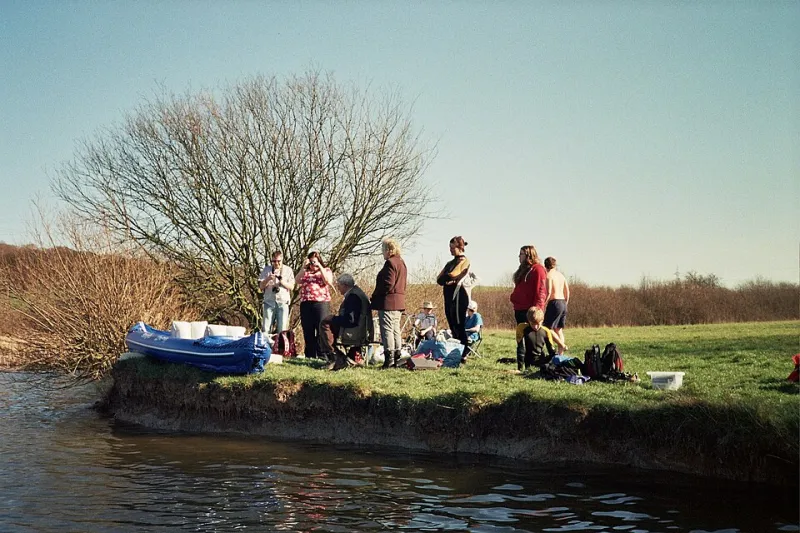
Photo: Andy Davis , CC BY-SA 2.0, via Wikimedia Commons
Wild swimming has become the adventure holiday equivalent of the word 'artisan' — it sounds reassuring, but it can mean almost anything. On a UK break in 2026, 'wild swimming included' might mean a qualified guide with a tow float and a tide plan, or it might mean someone waving at a nearby lake and saying, 'Off you go, then.'
The difference matters. Cold water is brilliant fun, but it is also cold water. A genuine guided swim has a plan, a ratio, a kit policy and an exit route. A vague one has a photograph of a lake on its homepage and a lot of enthusiasm. The good news is that you can usually tell the two apart with one polite phone call or email before you pay a deposit. Here is what to ask, and what a decent answer sounds like.
Start with the swim plan, not the scenery
Before you get excited about sunrise dips and mountain backdrops, ask a simple question: what is the actual swim?
A proper operator should be able to tell you where you will swim, when you will swim, how far it is, how deep it is, where you get in and — crucially — where you get out. They should know the likely water temperature for the time of year, the tide or flow conditions, and what happens if the weather turns. If the answer is 'we'll see on the day', that is fine for a casual dip with friends. It is not a plan for a paid adventure holiday.
Ask about the backup. A genuine cold-water trip will have an alternative venue or a dry-land activity if conditions are unsafe. A paddle and a promise will usually have neither.
Ratios, qualifications and the person actually watching
You do not need a national standard tattooed on the booking page, but you do need clarity. Ask how many swimmers there are per guide, whether there is separate shore cover, and what qualifications the lead guide holds. For cold-water swimming, look for evidence of open-water or lifesaving training, first-aid certification and a clear understanding of cold-water shock, hypothermia and after-drop.
A useful ratio for a guided group swim is often around one guide to eight or ten swimmers, depending on conditions, water temperature and the group's experience. But the number matters less than the safety system around it. Is someone staying out of the water to watch? Is there a kayak or rescue board? Is there a dry bag with warm clothes, a shelter and a phone signal plan? If the operator cannot explain how they would get a cold, panicking swimmer out of the water, keep looking.
Wetsuits, tow floats and the kit list test
A serious operator will have a kit policy, not a kit suggestion. Ask whether wetsuits are included, whether they are mandatory, and how they are fitted. A ill-fitting wetsuit is worse than no wetsuit because it traps cold water and restricts movement. Ask about tow floats, bright swim hats, neoprene gloves and boots, and whether you need your own changing robe.
The kit list is also a clue. If the operator sends a detailed list a week or two before the trip — including footwear for a rocky entry, a warm layer for afterwards and a plastic bag for wet kit — that is a good sign. If the only instruction is 'bring a towel', treat the trip with caution. Cold-water swimming is not complicated, but it is not nothing.
Water quality is a question, not a vibe
In the UK, water quality varies enormously between a mountain tarn, a river, a reservoir and a popular beach. Ask what checks the operator does and when. In England, the Environment Agency publishes pollution risk forecasts for some designated bathing waters; Natural Resources Wales, SEPA and DAERA have their own equivalents. Surfers Against Sewage's Safer Seas & Rivers Service is another useful public source.
A good operator will not promise 'clean water' as a permanent fact. They will tell you they check before the trip, avoid swimming after heavy rain where runoff is a risk, and have a plan for blue-green algae or unusual pollution. If they get defensive about the question, that tells you something.
Tides, access and the unglamorous exit
Cold-water adventure is often won or lost on access. Ask who owns the land, whether the group has permission to park and change there, and whether the entry and exit points are safe at the planned tide. In Scotland, the right of responsible access is broader, but it still comes with responsibilities. In England and Wales, access to water is not universal, and a beautiful river bank may still be private land.
Ask about toilets, changing facilities and the walk back to the vehicle. A swim that looks lovely on Instagram can be a miserable experience if the exit is a steep, slippery bank in a wind. Good operators know their venues intimately and will talk about the boring bits without prompting.
The questions to send before you pay
If you are comparing cold-water trips, send this list to each operator:
- What is the planned swim location, distance and water temperature range?
- What is the guide-to-swimmer ratio, and who provides shore cover?
- What qualifications and first-aid training does the lead guide hold?
- Are wetsuits mandatory, included and properly fitted?
- What is the backup plan if conditions are unsafe?
- When and how do you check water quality?
- Who owns the access point, and where do we change?
- What is the refund or transfer policy if the operator cancels?
Green flags and gentle warnings
Green flags include named venues, small groups, a clear weather call, a kit list sent in advance and guides who sound pleased to be asked. Amber flags include 'all levels welcome' with no mention of cold-water experience, a ratio that sounds suspiciously large, or pressure to buy expensive kit from a single supplier. Red flags include no refund policy for conditions, no named guide, and any suggestion that safety is a matter of positive thinking.
A cold-water holiday should leave you buzzing, not guessing. The best operators in the UK are proud of their plans because they know the details are what make the dip feel wild rather than reckless. Ask the questions, listen to the answers and book the one that treats a chilly swim as an adventure worth preparing for.