Moderate Is a Mood, Not a Measurement: How Adventure Grades Really Work
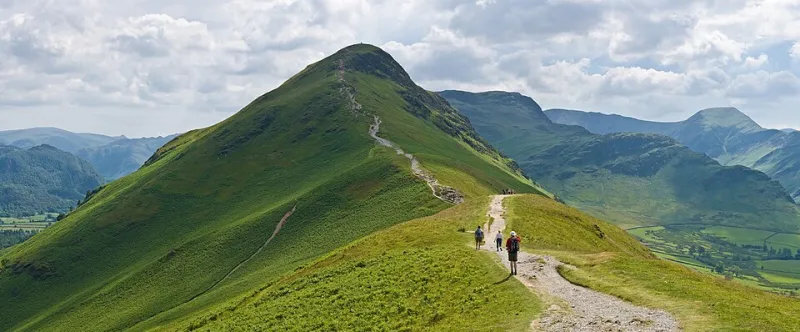
Photo: Diliff, CC BY-SA 3.0, via Wikimedia Commons
There's a moment, usually about three clicks into a booking page, when the grade appears. Moderate. Or challenging. Or, my personal favourite, suitable for all abilities. It sits there like a reassuring hand on the shoulder, and it tells you almost nothing.
That isn't a dig at operators. Grades exist for a reason: they're a quick shorthand, a way to sort a weekend of low-level rambling from a five-day wild camp across the Cairngorms. The trouble is that there's no single, shared standard behind the words. One company's "moderate" is a gentle six-mile circuit with a pub at the end. Another's is eight hours of bog, boulder and ascent with a head torch finish.
So before you pay up, it pays to read the grade the way you'd read a weather forecast — as a useful signal, not a guarantee.
The labels are shorthand, not a standard
Broadly speaking, most UK walking and adventure operators use a four- or five-tier scale. It usually looks something like this:
- Easy or gentle: three to five hours of walking, modest ascent, clear paths, plenty of stops.
- Moderate: five to seven hours, perhaps 500–800 metres of ascent, mixed ground, a longer day out.
- Challenging: eight hours or more, bigger climbs, remote terrain, possibly navigation and early starts.
- Strenuous or expedition: multi-day, heavy pack, wild camping, long consecutive days, genuine self-sufficiency.
That's a reasonable starting point. But notice what's missing from every one of those lines: pace, pack weight, terrain underfoot, altitude, exposure, weather, and what happens if you're the slowest in the group. The grade describes the shape of the trip. It doesn't describe the texture.
What the brochure quietly leaves out
A few things tend to get lost between the marketing copy and the reality of the day.
Distance is not difficulty. Ten flat miles on a canal towpath and ten miles over the Lakeland fells are not the same animal. Ascent, descent and ground underfoot matter far more than the number on the map.
Moving time vs elapsed time. A "six-hour day" might mean six hours of walking, or it might mean six hours door to door with lunch, photos and a long wait for the group to regroup. Ask which one the operator means.
Pack weight. A day sack with a flask and a sandwich is a different proposition to a 15kg pack with tent, stove and four days of food. Some operators carry group kit; some don't.
Terrain. Bog, scree, boulder fields, exposed ridges and river crossings all slow you down and raise the stakes. A grade rarely mentions them.
The group effect. Walking in a party of twelve means waiting, adjusting and sometimes walking at someone else's rhythm. That can add hours to a day — and it's rarely reflected in the grade.
Sleep and comfort. A challenging day after a poor night in a bunkhouse is not the same as the same day after a good sleep. Multi-day trips compound this.
Five questions worth asking before the deposit
A good operator will answer these without flinching. A vague one will change the subject. Either response is useful information.
- What's the total ascent and the longest day, in both kilometres and hours? Get the numbers, not the adjective.
- What's the typical pack weight, and who carries the group kit? This one question often separates a genuine challenge from a stroll with a nice photo stop.
- What pace do you walk at, and what happens if I'm slower? There should be a clear answer about regrouping, sweepers or bail-out options.
- What's the ground like underfoot, and will I need to navigate? Path, bog, scree, hands-on scrambling — it all changes the day.
- What are the escape routes if the weather turns or someone struggles? Remote is lovely until it isn't.
A self-assessment that tells the truth
Holiday optimism is a powerful thing. We book in January, imagining a fitter, more energetic version of ourselves in July. Here's a short reality check to run before you commit.
- Recent walking: What's the longest walk you've done in the last two months — not the last two years?
- Consecutive days: Have you walked on back-to-back days recently, or is one big day your limit?
- Ascent: Have you climbed 500 metres or more in a single walk this year? 800? 1,000?
- Pack: Have you carried a full day sack — or a multi-day pack — over hilly ground?
- Stairs test: Can you climb ten flights of stairs without stopping and still hold a conversation?
- Recovery: How do your knees and ankles feel the day after a long walk?
- Navigation: Could you follow a route on a map and compass if the path vanished in mist?
- Weather tolerance: Are you genuinely happy in wind and rain for six hours, or do you merely tolerate it for two?
Then apply the oldest rule in adventure booking: drop one grade from what you think you can do. If you're eyeing a challenging trip, make sure your recent experience comfortably sits at moderate. If you're new to multi-day walking, start with two days, not five.
Matching the trip to the real you
A few honest examples. If your longest recent outing is a two-hour dog walk on the levels, a moderate fell day with 700 metres of ascent will feel like a serious step up — book a guided low-level weekend first. If you're a regular gym-goer but rarely walk on uneven ground, expect the descent to be the surprise, not the climb. And if you've done a few long days in the Peak District but never carried a heavy pack, a wild-camping trip will test you in ways the grade won't mention.
None of this is about talking yourself out of an adventure. It's about booking the one you'll actually enjoy, rather than the one you'll survive.
The grade is the start of the conversation
The label on the booking page is a door handle, not the room. Use it to narrow the field, then ask the questions that turn a vague adjective into a real day out. The best operators will welcome that — because a well-matched group is a happier group, and a holiday that fits is worth far more than one that flatters.
Pack the flask. Ask about the ascent. And treat "moderate" as a mood, not a measurement.