One Roof, Many Horizons: Why the Best Adventure Itineraries Barely Move
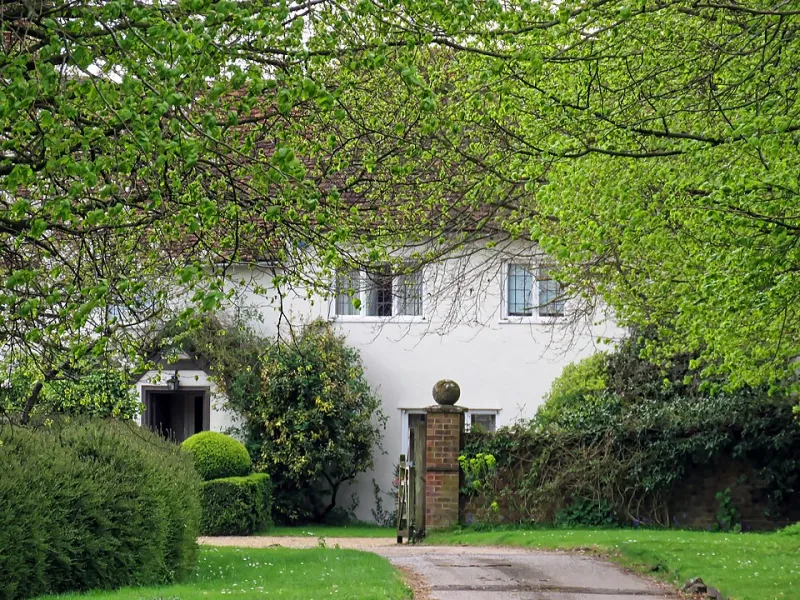
Photo: Acabashi, CC BY-SA 4.0, via Wikimedia Commons
There is a particular kind of holiday tiredness that has nothing to do with walking. It's the 6.30am zip, the bag outside the door, the coach idling in the car park, the seventh unfamiliar bathroom in seven days. By the end you've seen a great deal and remember surprisingly little of it.
I've come round to a different idea. The best explorer itineraries I've come across tend to have one stubbornly unmoved base — a farmhouse in the Yorkshire Dales, an inn above a Welsh valley, a cottage a short scramble from a Pembrokeshire cove — with the days radiating out from it like spokes. Same bed. Different horizon.
This isn't nostalgia for a slower era, or a quiet life. It's a practical argument, and I think it's a strong one.
The tyranny of the nightly repack
Packing once is an underrated luxury. When the base is fixed, the walking boots stay by the door, the wet kit dries on a radiator, the paperback stays on the windowsill and the day bag can be repacked in ninety seconds because you know exactly where everything lives. Over a week, that adds up to hours — hours that, on a moving itinerary, get spent zip-lining a suitcase and counting socks.
Energy is finite on any active holiday. Spending it on logistics rather than on the hill is, frankly, a design flaw.
Weather has somewhere to go
A hub-and-spoke trip is inherently flexible. If Tuesday's ridge is in cloud, you go to the coast instead and do the ridge on Thursday. That's only possible when you haven't already driven two hours away from the ridge.
This matters more in the UK than almost anywhere. Our weather doesn't do reliable. An itinerary that can shuffle itself around a stubborn base is a far more resilient proposition than one locked into a hotel booking three valleys away.
Local knowledge compounds
Here's the bit most operators miss. A guide who returns to the same village every evening learns things a moving group never will: which pub has the fire lit, which bakery sells out by nine, which farmer doesn't mind a small group crossing the top field, which café owner will open early for a group of eight.
That knowledge doesn't just make the trip pleasanter. It makes it more genuinely rooted. You stop being a passing coach and start being, very briefly, a regular.
A lighter footprint, quietly
I'm wary of eco-claims, because most of them are marketing. But the arithmetic here is hard to argue with. One base, one set of linen changes, one bin day, and far fewer vehicle miles than a tour that moves every morning. If a hundred guests stay put over a season and do short local hops instead of a seven-stop loop, the transport line in the carbon ledger shrinks considerably without anyone having to make a speech about it.
How to tell a real hub-and-spoke trip from a coach tour with scenic stops
This is where the reading gets forensic. Open the day-by-day itinerary and look for these signals.
Language that returns. "Back to the farmhouse", "return to the inn", "evening at leisure at the cottage". Recurring place names in the evening slots are the clearest giveaway.
Clustered nights. Genuine basecamp trips show two, three, four or five nights in one place. If a week includes five different accommodation entries, it isn't one — whatever the headline claims.
Short, radial distances. Day drives of twenty to forty minutes in several directions. Pretty different from a 180-mile transfer described as "a scenic journey through the heart of the region".
Ragged days. Free afternoons, optional add-ons, a day where the plan is deliberately loose. Fixed bases allow that; moving itineraries usually can't.
A named person, in one place. "Your guide, who lives locally" reads very differently to "local guides join you at various points".
No daily bag-out. If the itinerary doesn't mention luggage, there's a good chance it's moving every day.
And the reverse signals: the word "panoramic" doing heavy lifting, hotels listed as "or similar" in a different town each night, and day three being mostly a coach.
Where it works best in Britain
A week in the Dales or the North York Moors rewards a single base beautifully, because the valleys are close together and the weather varies enough that flexibility pays. Eryri and the Lake District suit a fixed cottage with a car or a willing driver. The Cairngorms are perhaps the purest example — a village inn with a dozen different days within half an hour. Coastal corners like Pembrokeshire or the far north-west of Scotland, where the driving is slow and the rewards are dense, are made for it.
The honest counterargument
Some trips should move. A coast-to-coast traverse, a long-distance trail, a multi-island hop — these are linear by nature, and forcing them into a base would be nonsense. The argument isn't that every itinerary should stay put. It's that a lot of itineraries move far more than they need to, because moving is easier to sell than staying.
The short version
A single base is not a lack of ambition. It's a decision about where to spend your energy — on the hill, in the pub, in conversation with someone who's lived in the valley for thirty years, rather than in a car park at dawn.
When you're next reading an itinerary, count the beds. If there's only one, you've probably found something worth booking.