Deposits, Bonds and Bluffs: What Actually Protects Your Adventure Money in 2026
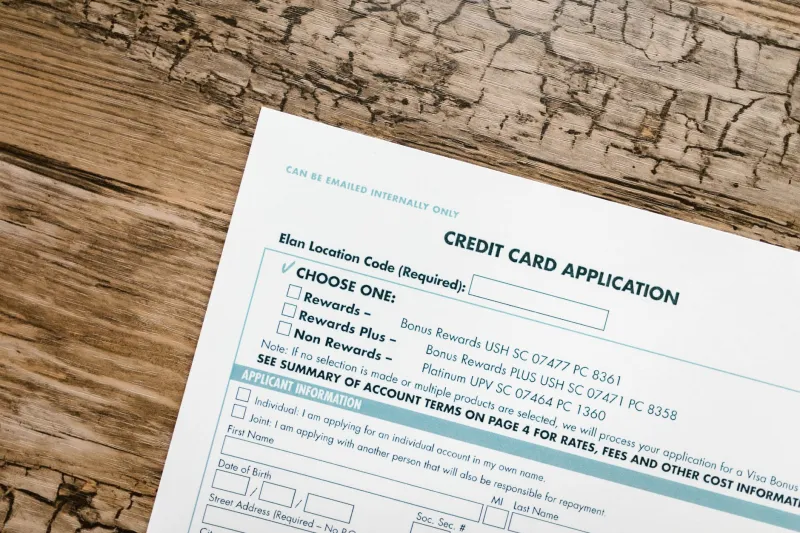
Somewhere between finding the trip and tapping in your card details, most of us skip a page. The itinerary gets read three times. The kit list gets screenshotted. The terms and conditions get a quick flick and a shrug.
That's understandable — but it's also exactly where small adventure operators differ most wildly from one another. Two trips can look identical on Instagram and be protected in completely different ways. One might have your money ring-fenced in a client account; another might have it sitting in the director's current account, quietly propping up next season's van lease. You won't know which unless you ask.
This isn't a scare story. The overwhelming majority of UK adventure operators are decent, careful people running tight ships. But 'decent' and 'protected' are two different things, and only one of them gets your deposit back.
First, the awkward question: is your trip actually a package?
The Package Travel and Linked Travel Arrangements Regulations 2018 — a mouthful, but the backbone of holiday protection in the UK — kick in when you buy two or more different travel services for a single price, or in a way that's effectively bundled by the operator. Accommodation plus an activity. Transport plus a stay. Get that combination and you have statutory rights: the organiser must be financially protected against insolvency, and must get you home if they collapse while you're away.
Here's the wrinkle. A guided activity week with no accommodation, no transport and nothing else thrown in generally isn't a package. Neither is a one-day course, a skills workshop or a guided summit day. That's not a loophole being exploited — it's simply outside the scope. But it does mean the protection you assumed you had may not exist at all. If you're paying £700 up front for a five-day sea kayaking course, ask the direct question: 'If you went under next month, what happens to my money?'
ATOL, ABTA and the rest of the alphabet soup
ATOL covers flight-inclusive packages. If a flight forms part of what you're buying, the operator should hold an ATOL and give you the number — you can check it on the CAA's website in about twenty seconds. No number, no flight-inclusive package.
ABTA membership comes with bonding and a code of conduct behind it, and it's genuinely reassuring. It isn't a legal requirement, though, so its absence isn't automatically a red flag — plenty of excellent small operators simply aren't members.
Then there's the phrase 'fully insured'. In this context it usually means public liability cover: protection for them if you injure yourself under their supervision. It does nothing for your deposit if they go under. Worth asking which of the two they mean, because you'll often get a slightly flustered 'both, I think'.
Where does your deposit actually sit?
A client account — sometimes called a trust account — is the gold standard for small operators. Your money is held separately until your trip runs, so if the company folds in March, your July deposit is still sitting there rather than having been spent on new wetsuits.
Ask: 'Is my deposit held in a client account, and is it independently audited?' A confident, specific yes is a good sign. 'We're very careful with money' is not an answer, however nicely it's phrased.
The balance date is a cliff edge
Most operators want the balance somewhere between eight and twelve weeks before departure. From that point, cancellation terms tend to get steep — often the full trip cost inside 30 days. Two things follow. Put the balance date in your calendar with an alarm, because missing it can be treated as a cancellation. And ask what happens if they cancel: bad weather, a guide injury, or the trip failing to reach minimum numbers.
That last one matters more than people realise. Small-group operators often need six or eight bookings to make a departure viable, and many reserve the right to pull it. Find out, before you pay, whether you'd get cash back, a credit note, or a vague promise to move you to another date. A credit note isn't necessarily a disaster — but you should know you're accepting one.
Paperwork that reassures, and words that don't
Reassuring looks like this: a named legal entity rather than a trading name floating on its own; a company number you can look up at Companies House; an ATOL or ABTA number where relevant; a written confirmation with the cancellation terms inside the document itself; a proper invoice rather than a bare payment link; and a phone number that a human answers before you've paid.
Warm words look like this: 'Don't worry, we're fully covered.' 'We've never had an issue.' 'We've been doing this for fifteen years.' Longevity is a real signal — surviving fifteen British summers takes effort — but it isn't protection. And a Companies House check takes half a minute: a firm incorporated eight months ago with a slick site and forty five-star reviews is worth a second look.
Pay in a way that gives you a second line of defence
Credit card, over £100: Section 75 gives you joint liability with the card issuer. Debit card: chargeback, which isn't a legal right but is often effective. Bank transfer: nothing at all. So if an operator dangles a small discount for paying by transfer, weigh that against losing your only route to a refund. If PayPal is on offer, make sure you're on the goods-and-services route rather than a personal payment.
Travel insurance is a separate layer again. It covers you falling ill or breaking something; it generally doesn't cover the operator going under, unless your policy includes end-supplier failure. Check the activity exclusions too — coasteering, winter hillwalking and open-water swimming are precisely the things insurers like to leave out.
Five questions, one email
Send them all at once, before you pay:
- Is my trip a package under the Package Travel Regulations, and if not, what protection applies?
- Do you hold an ATOL or ABTA number, and is my money held in a client account?
- What's the balance date, and what are the cancellation terms after it?
- Under what circumstances would you cancel the trip, and what would I get back?
- Which insurer covers your activities, and what does your public liability policy actually cover?
The good ones will answer cheerfully, in writing, on a Tuesday afternoon. The ones who get defensive have told you something useful too.